
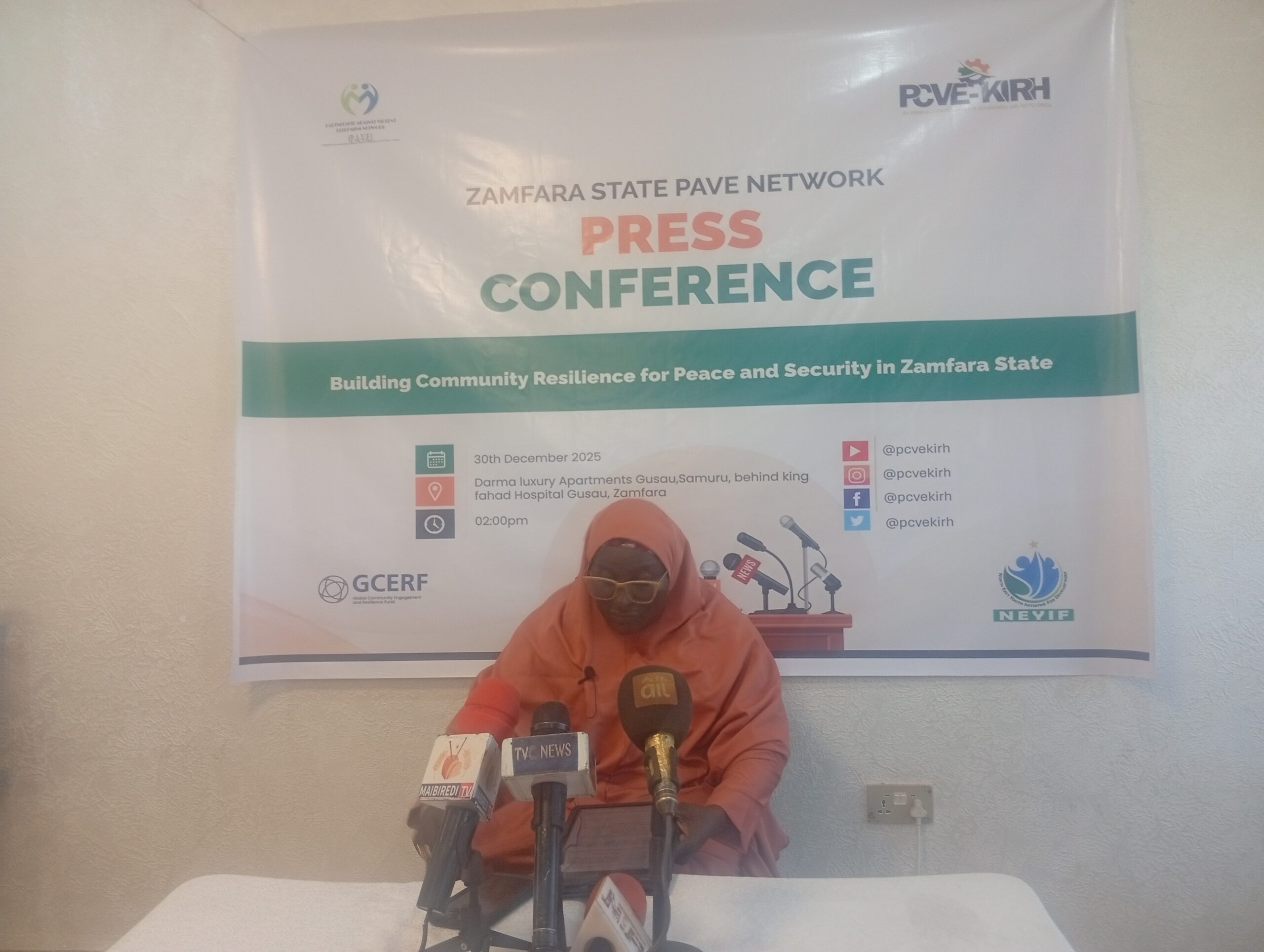
The PAVE Network, Zamfara State Chapter, has raised concern over the growing threat of violent extremism, banditry and the recent use of improvised explosive devices (IEDs) on major roads in the state, calling for stronger community-based prevention efforts.
Speaking at a press conference in Gusau, the State Chair of the PAVE Network, Aishatu Abdu Gusau, said Zamfara and other North-West states continue to face complex security challenges driven more by criminality, poverty, weak governance and community distrust than by extremist ideology alone.
She cited recent IED incidents along the Anka and Dansadau corridors within the last one month, which targeted innocent travelers.
According to her, the broader security situation in the North-West is worsened by the proliferation of armed groups, rising banditry and kidnapping, economic marginalization in rural communities, and weak community safety structures. She stressed that these challenges require preventive and inclusive responses beyond military action.
Aishatu disclosed that the PAVE Network has recorded progress in Preventing and Countering Violent Extremism (PCVE) through stakeholder capacity building, including workshops for government officials, security agencies, traditional rulers, women, youth groups and civil society organizations.
She said these engagements helped identify local drivers of violent extremism and support the co-creation of State and Local Action Plans (SAPs and LAPs).
She added that community dialogues and peer-learning exchanges across the North-West have strengthened collaboration, reduced duplication of efforts and promoted youth empowerment and early warning mechanisms at the grassroots. Advocacy visits to state governments and legislatures have also helped secure political support for PCVE policies and resource allocation.
The PAVE Network Chair noted that community resilience campaigns held across several communities have promoted peace education, tolerance and conflict awareness, resulting in increased community interest and ownership of PCVE initiatives. She said the state has also begun integrating PCVE into budget proposals and setting up technical working groups.
Despite these gains, Aishatu identified persistent challenges such as the continued presence of armed groups, youth unemployment, weak intelligence sharing in some local government areas and gaps in mainstreaming PCVE into sectoral plans. She emphasized that security operations alone cannot end violent extremism.
She called on residents to remain vigilant, traditional and religious leaders to promote peace, NGOs to lead grassroots mobilization, youths and women to drive positive narratives, and government agencies to integrate PCVE into planning and budgeting. She also urged the media to responsibly amplify peace messages and counter misinformation.
Aishatu reaffirmed the commitment of the PAVE Network to work with all stakeholders to promote peace, resilience and inclusive security, stressing that building a safer Zamfara State is a shared responsibility of government and citizens alike.